
The Role of Data Changed · From Fuel to Intelligence
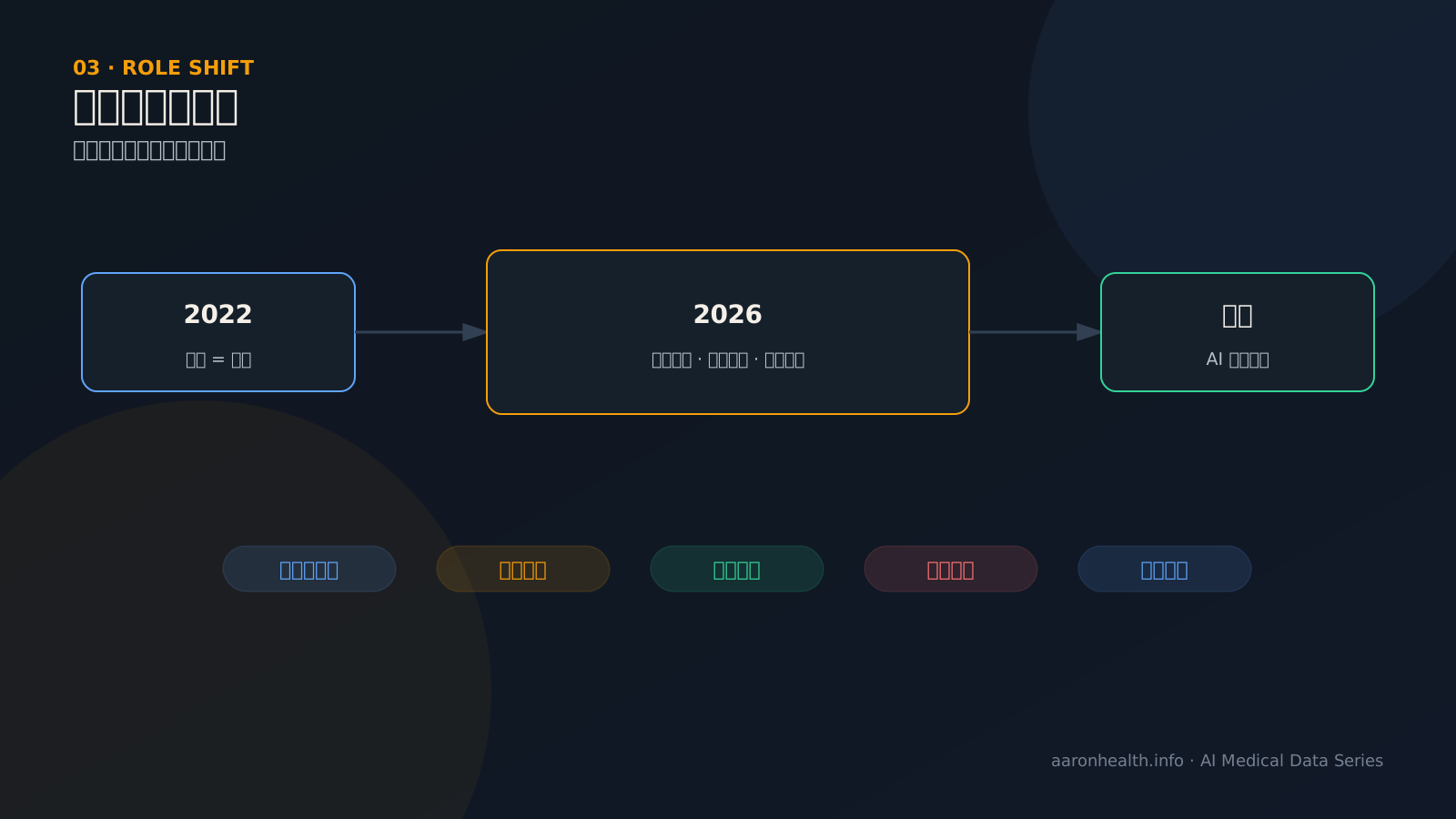
Chapter 3 · In 2022 data was fuel; in 2026 data is intelligence
If you take away one line from this whole course, take the one in this chapter:
In 2022 data was fuel. In 2026 data is muscle memory, a knowledge asset, and the basis for decisions.
This chapter unpacks, in full, the seed planted in Chapter 1.
First generation: data = training fuel
Defining trait: supervised learning What it wanted: large volumes of labeled samples How value was measured: accurate labels, more samples, broader coverage Typical examples: ImageNet, lung-nodule annotation sets, contract-clause classification sets
The data mindset of this era was dead simple — more is better, more is winning.
Second generation: data = the emergent scale dividend
Defining trait: “brute force works miracles” What it wanted: massive unlabeled corpora How value was measured: scale, diversity, cleaning quality Typical examples: Common Crawl, Wikipedia, trillion-token corpora
The essence of the GPT moment is this: once data volume crosses a threshold, capability emerges. So in this era a lot of companies competed on “how many tokens, how many images, how many cases do I have.”
But by 2026, that playbook stopped working.
Third generation: data’s role goes fivefold (today, 2026)
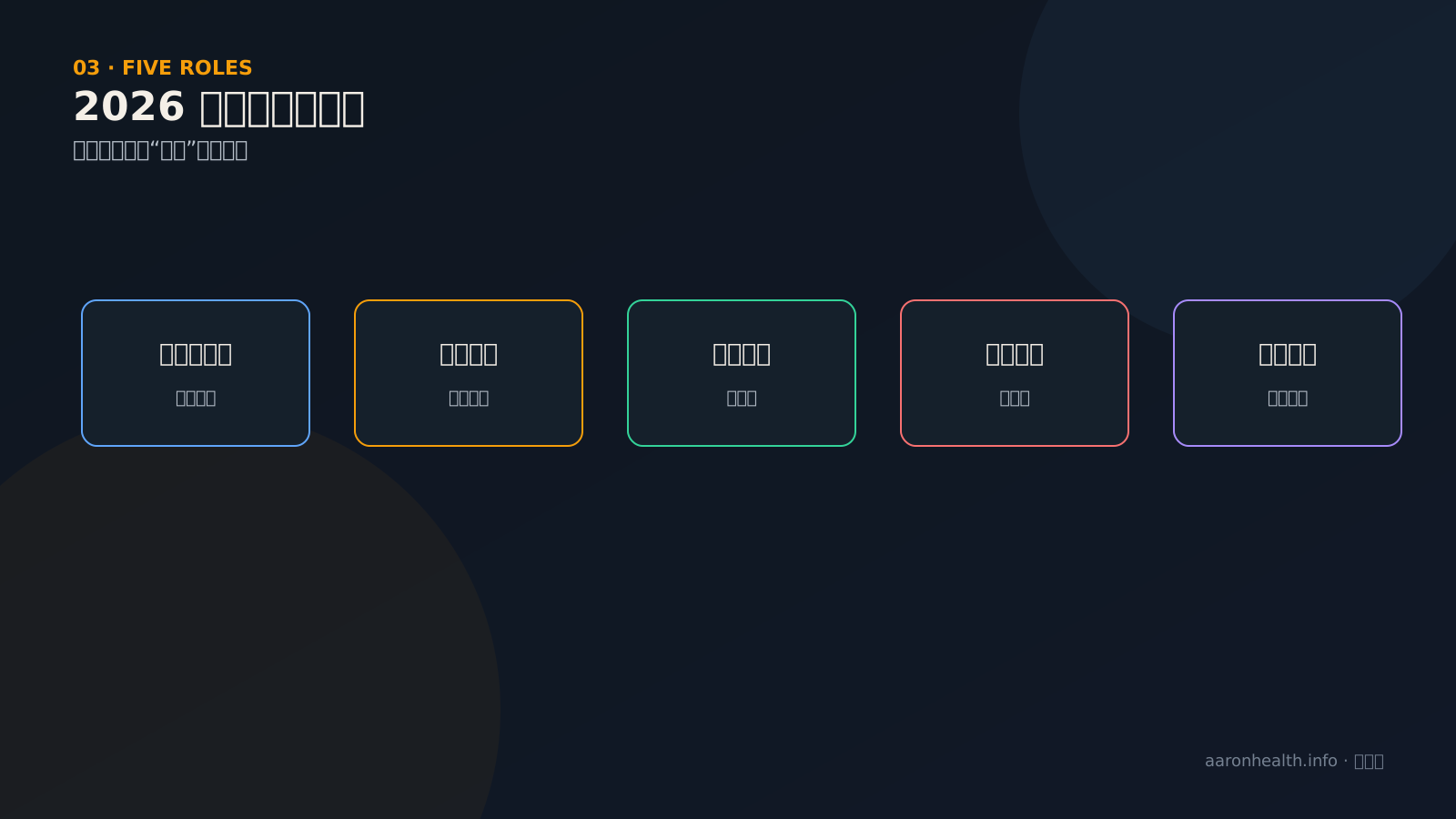
In 2026, data is no longer a single role — it’s five roles stacked:
1. Pretraining fuel (diminishing returns) Base models still need it, but piling on raw volume yields less and less. For a single hospital or law firm, there’s almost no opening here — you can’t afford it.
2. Post-training alignment data (RLHF/DPO/Constitutional AI) Brings the model in line with human preferences. This is something a vertical domain can actually do.
3. Reasoning-trace data (the training core of o1/Mythos) “The expert’s thought process.” This is the most valuable data in medicine and law in 2026.
4. Agent-interaction data How the agent uses tools, calls APIs, corrects its own errors. This is the core of what makes the flywheel turn.
5. Decision-time data (RAG/context/personalization) Knowledge retrieved at inference time — not corpus consumed at training time.
Plus a hidden sixth role:
6. Evaluation data In medicine this one matters most — getting it wrong can cost a life. The evaluation set decides whether AI makes it into the clinic.
The shift in one line
The old game competed on scale. The new game competes on quality, expertise, and the closed loop.
The 2022 play was “how much data do I have.” The 2026 play is “how dense is the expert wisdom in my data, how fast does my feedback loop close, how tightly do I guard my evaluation set.”
What this shift means for medicine and law
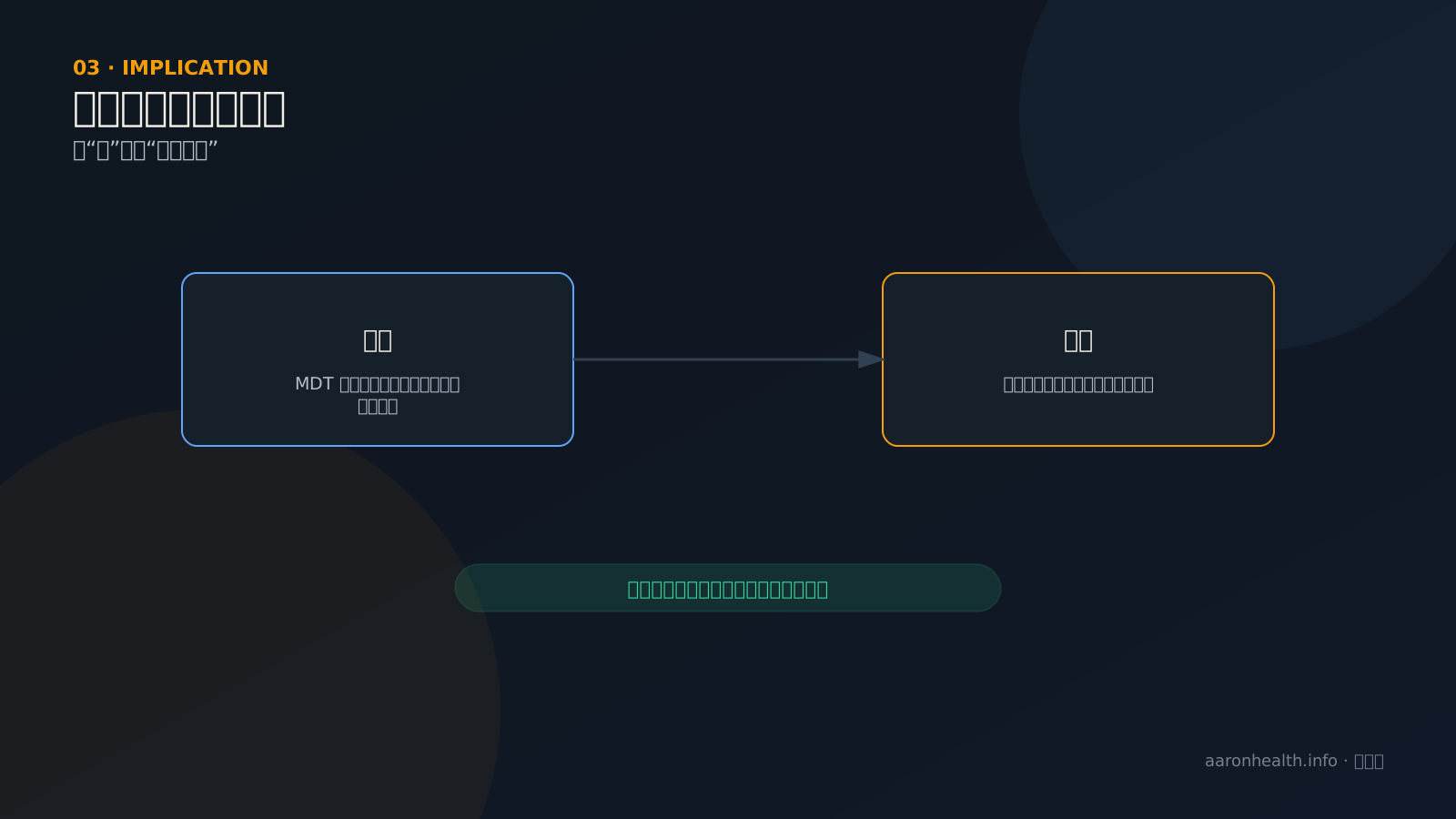
A single hospital cannot build a base model. Get clear on that first.
But a single hospital can build:
- Domain evaluation sets — gold-standard question banks by specialty
- Specialty reasoning chains — an MDT data production line
- Expert-preference alignment data — RLHF preference pairs
This is the unique value of a healthcare institution in the age of AI — you can buy a base model, but you can’t buy the evaluation set or the reasoning chains.
Law runs perfectly parallel:
- A law firm can’t build a base model
- But it can build structured data of judges’ reasoning from judgments, risk-evaluation sets for contract clauses, and legal-argument reasoning chains
- These are the legal profession’s unique assets in the age of AI
The key takeaway of this chapter
It’s no longer “collect more, the better.” It’s “depth of expertise + governance quality + a closing feedback loop.”
The next chapter answers the obvious question: “So what actually counts as high-quality?” — the “professional muscle” chapter of this whole course, working through all 9 dimensions one by one.
留言
欢迎留言,匿名也可以。填邮箱能收到我的回复通知。