
Defining "Data" Clearly (the Concept Stack)
Chapter 2 · The six-layer ladder from data to ontology
Before you build data, define the word “data” clearly.
This isn’t pedantry — plenty of hospitals spend big money governing their data, only to find they governed the wrong target. The root cause is fuzzy concepts.
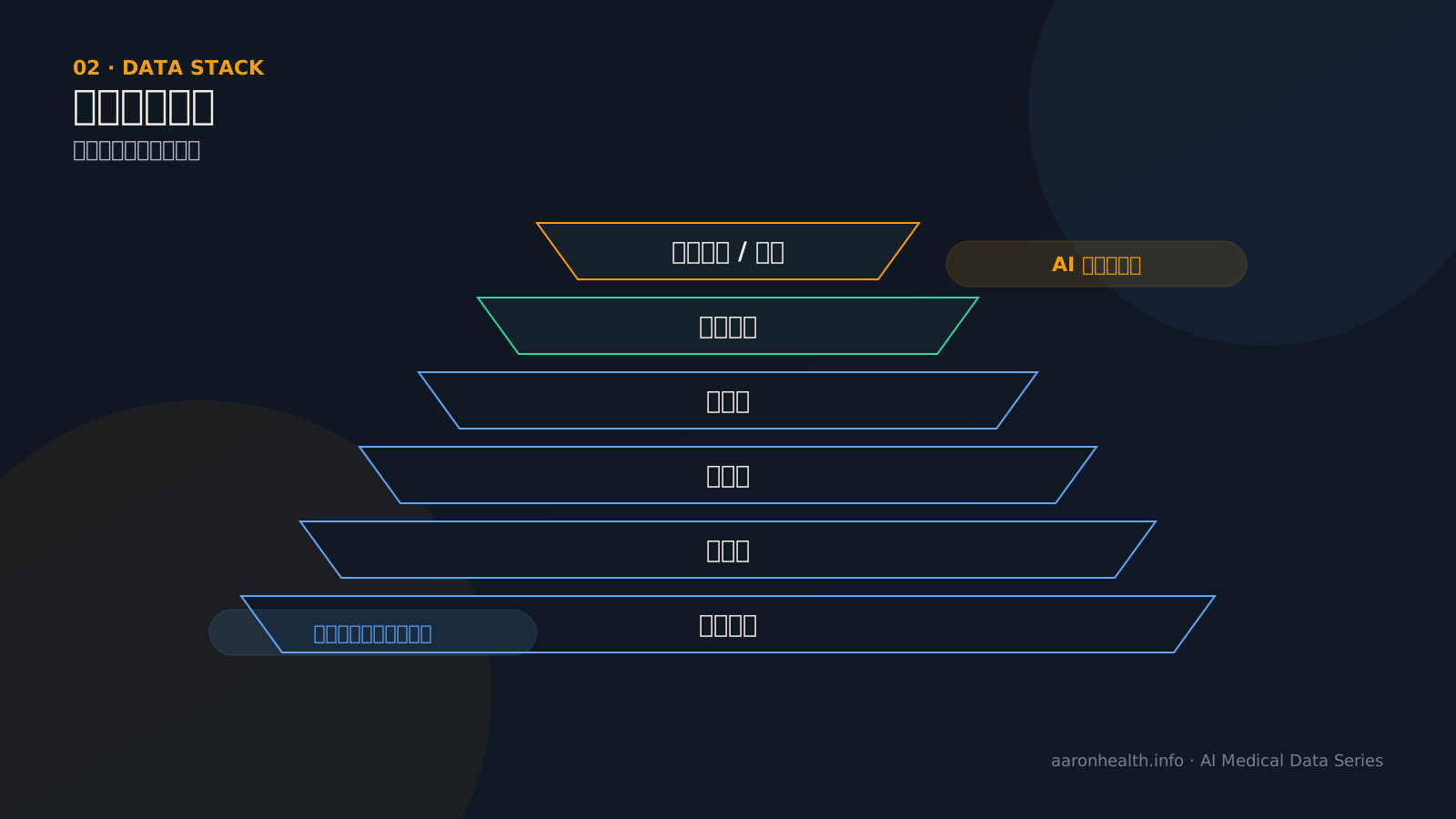
The six-layer data ladder
From raw to asset, data has six layers:
- Data — raw records. A lab test, a registration
- Data Source — the producing system. HIS, LIS, PACS, wearables, the internet hospital
- Metadata — data that describes data. Field meaning, timestamp, capture device, version, lineage
- Dataset — a collection of data organized for a specific purpose. E.g. a “breast cancer screening training set”
- Data Asset — a valuable, reusable, governed dataset. This is an organization-level asset
- Knowledge Graph / Ontology — a structured representation of medical knowledge
⚠️ Remember the word “ontology” at layer six. The Palantir case in Chapter 9 will come back to close the loop on it — it’s a hospital’s real moat in the age of AI.
The special taxonomy of medical data
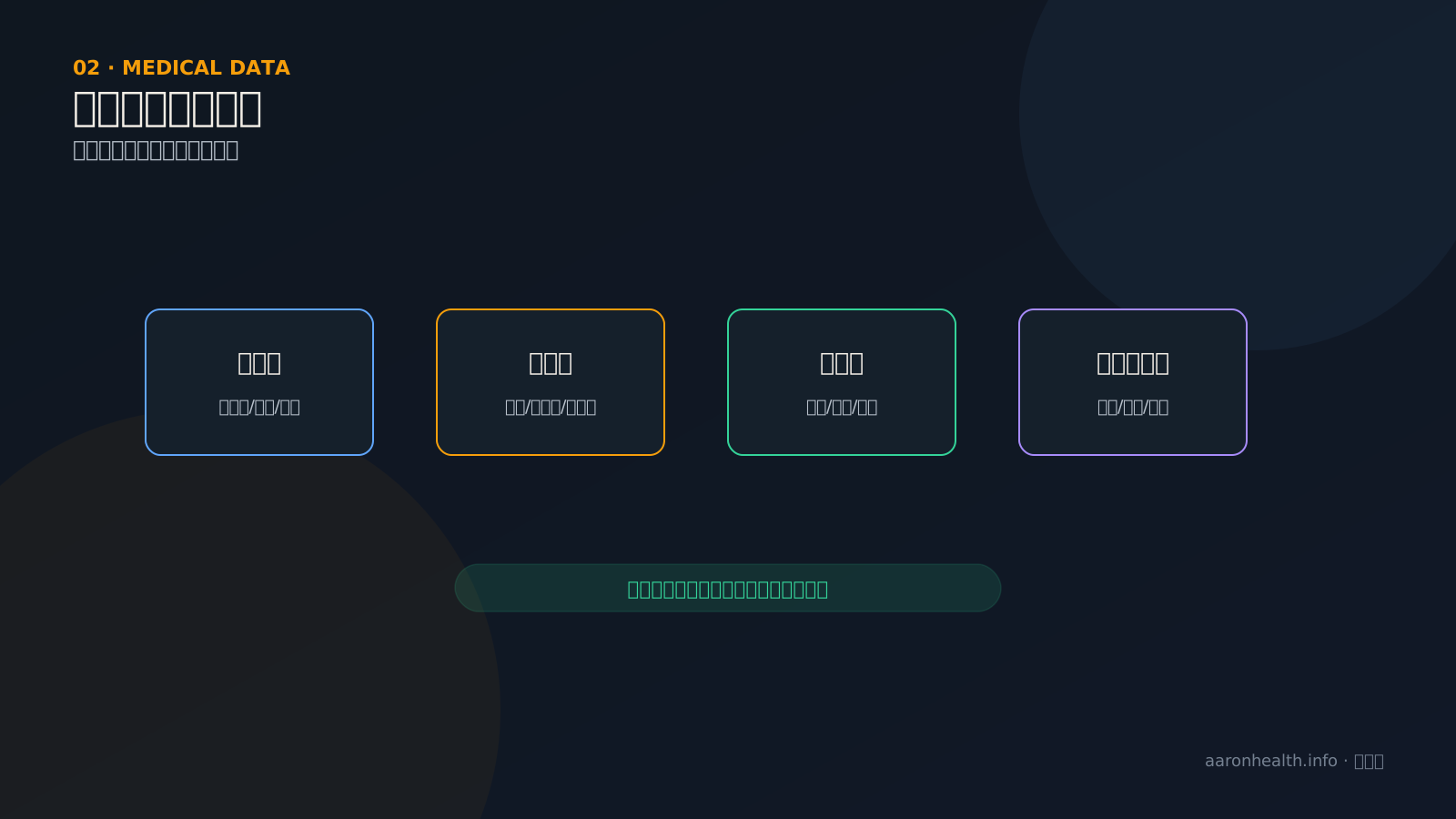
Slice medical data along four axes and the granularity gets sharper:
By subject:
- Master data (people / drugs / items / institutions)
- Operational data
- Clinical data
By form:
- Structured (lab results / prescriptions)
- Semi-structured (note templates)
- Unstructured (imaging / pathology / voice)
By source:
- Clinical real-world data (RWD)
- Omics data
- Behavioral data
- Internet-healthcare interaction data
By temporality:
- Cross-sectional data
- Longitudinal data (the full care journey) — this is the moat of medical AI
Law has a perfectly parallel taxonomy — by subject (parties / firms / courts), by form (structured judgment data / unstructured contract text / semi-structured pleadings), by source (judgment databases / statute libraries / contract libraries / case files), by temporality (first instance / appeal / retrial = law’s “full care journey”).
Three sets of easily confused concepts
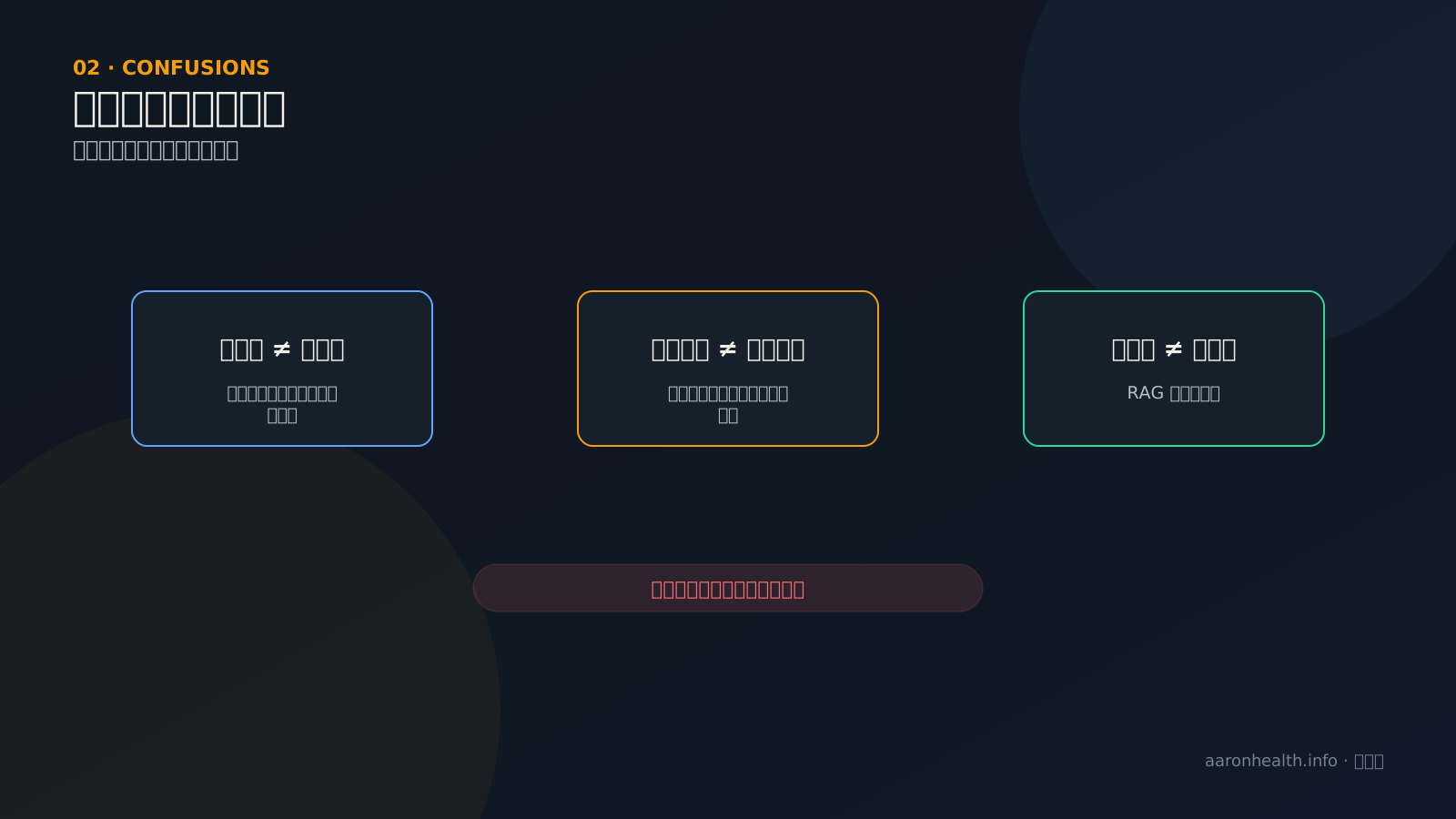
Sort out these three sets and your governance is on track:
Set one: high-quality data ≠ big data ≠ clean data
- Big data is about volume
- Clean data is about cleansing
- High-quality data is about matching the AI use case
Many hospitals spend big to “cleanse” their data, then find AI still can’t use it — because clean doesn’t mean high-quality.
Set two: annotation ≠ standardization ≠ governance
- Annotation is “labeling” data so AI can learn from it
- Standardization is unifying data from different sources into one “language” (codes / units / field naming)
- Governance is building the org, the rules, and the process to manage data as an asset
These three get conflated all the time, and the result is they annotate and think they’ve governed, they govern and think they’ve standardized.
Set three: dataset ≠ knowledge base ≠ evaluation set
- A dataset is for training the model (“feeding” it)
- A knowledge base is for retrieval at inference time (“looking up” knowledge)
- An evaluation set is for gatekeeping the model (“testing” it)
This set matters most — many hospitals blur the training set and the evaluation set together, so the model scores inflated on its own data and collapses the moment it hits the clinic.
My one-liner:
Blur the concepts and governance falls apart. Plenty of hospitals spend big money governing data, only to find they governed the wrong target.
Keywords of this chapter
- Metadata
- Ontology — Chapter 9’s Palantir case comes back to this
- Full-care-journey longitudinal data — the moat of medical AI
- Dataset vs knowledge base vs evaluation set — three things you can’t mix
Next chapter: the role of data has changed — from fuel to intelligence, the fundamental shift in how we saw data in 2022 versus 2026.
留言
欢迎留言,匿名也可以。填邮箱能收到我的回复通知。