
What the Age of AI Is (A 2026 View)
Chapter 1 · Three Generations of AI Paradigms and the Shifting Role of Data
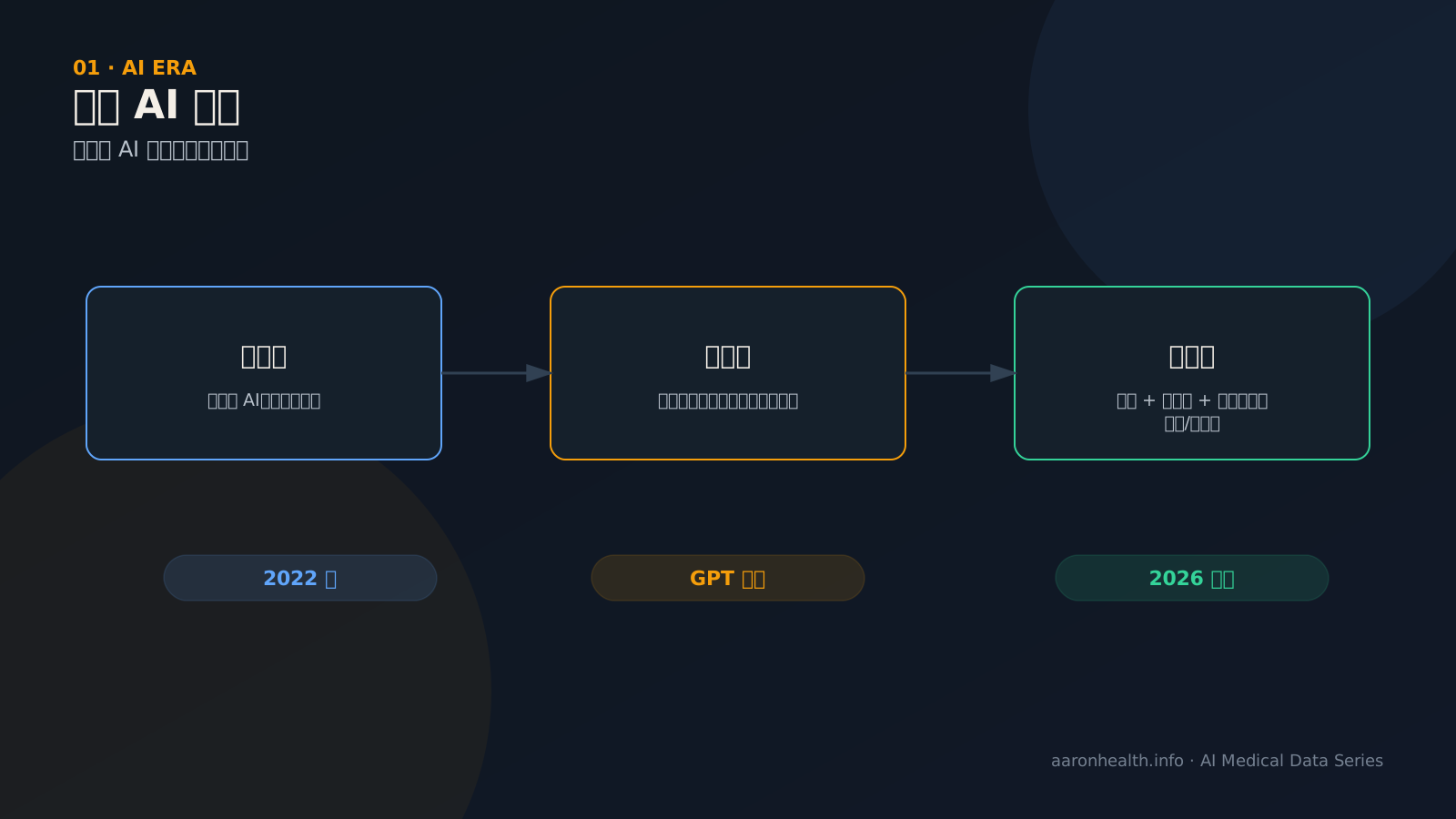
Before we can talk about building data, the first thing to do is be clear about which era we’re standing in.
Three generations of AI paradigms
AI in 2026 is a different animal from two years ago. I split it into three generations:
Gen 1 (before 2022) — Discriminative AI
- Paradigm: classic deep learning
- Key tech: CNNs, RNNs, hand-crafted features + hand-labeling
- Landmark: AlphaGo, early imaging AI
- What data had to be: large volumes of labeled samples (the fuel of supervised learning)
Gen 2 (the 2022 GPT moment) — Generative foundation models
- Paradigm: large-scale pretraining + emergent capability
- Key tech: the unifying Transformer architecture
- Landmark: the launch of ChatGPT
- What data had to be: massive unlabeled corpora (the scale dividend of pretraining)
Gen 3 (today, 2026) — Reasoning + multimodal + agents
- Paradigm: reasoning models, multimodal-native, agent collaboration
- Key tech: o1/Mythos-class reasoning models, VLA, world models, Agentic AI
- Landmark: OpenAI’s o-series, Manus, the Claude 4 series
- What data has to be: high-quality reasoning traces + multimodal alignment + agent-interaction data + expert-level evaluation sets
My take:
2022 was AI’s Renaissance; 2026 is AI’s Industrial Revolution. The first answered “can it?”; the second answers “can it actually get the job done?”
AGI isn’t an event — it’s a curve
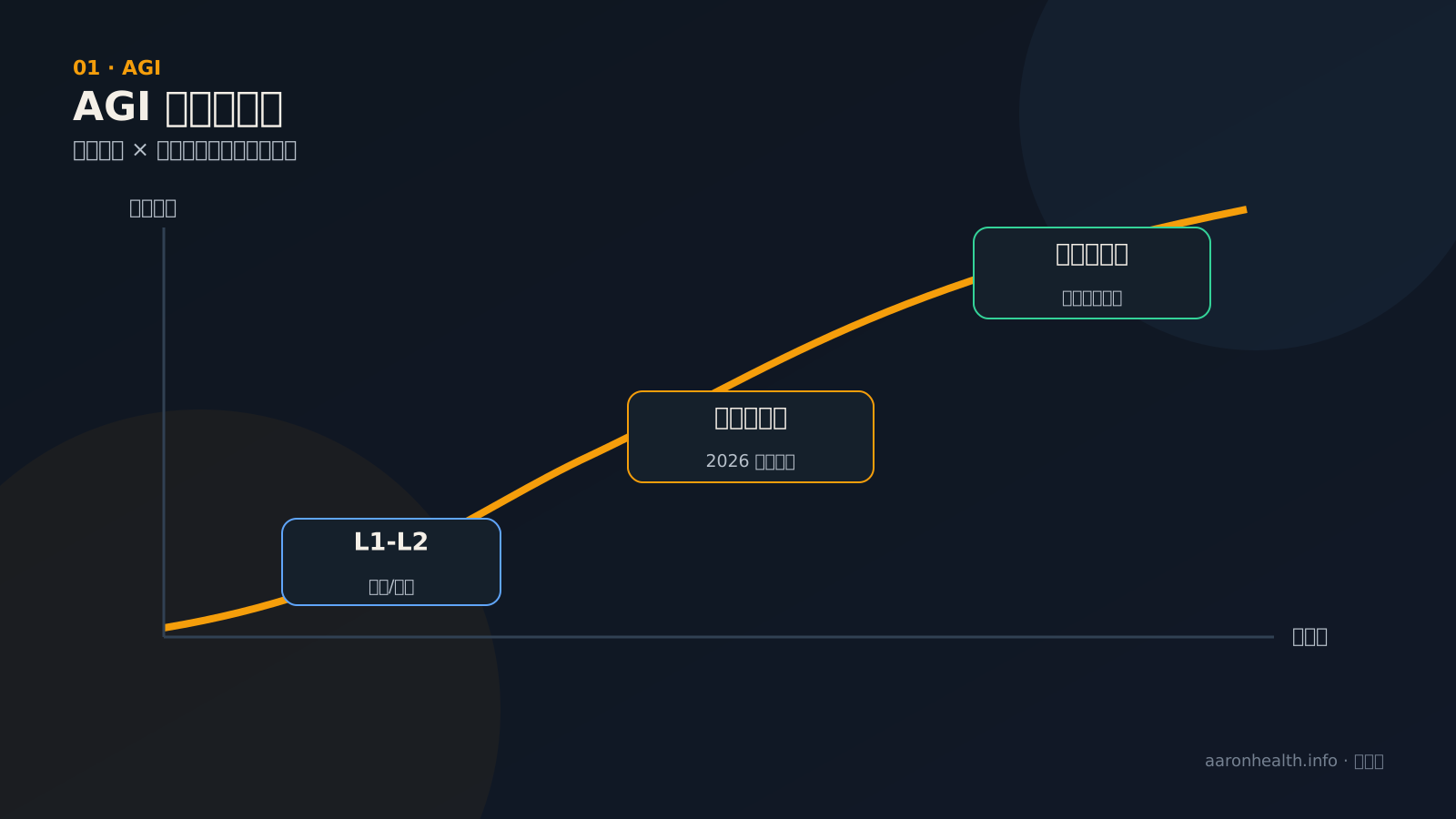
People keep asking when AGI will arrive. That’s the wrong question.
AGI isn’t a milestone that lands on some particular day — it’s a curve that climbs steadily. OpenAI gave us an L1–L5 capability ladder; Anthropic gave us ASL safety levels. Both are graded scales, not on/off switches.
Where we are now: expert-level reasoning (the IQ 130–140 band) is transitioning toward genius-level (IQ 200+). We’re already on the curve. The question isn’t whether AGI is coming — it’s how fast it’s coming, and whether we’re ready.
Judging AI’s capability takes two dimensions:
- Capability strength: how smart it is (IQ)
- Autonomy: how much it dares to act on its own (agency)
These two grow independently. Smart but not autonomous makes a great tool; smart and autonomous is a new species.
What the paradigm shift means for “data”
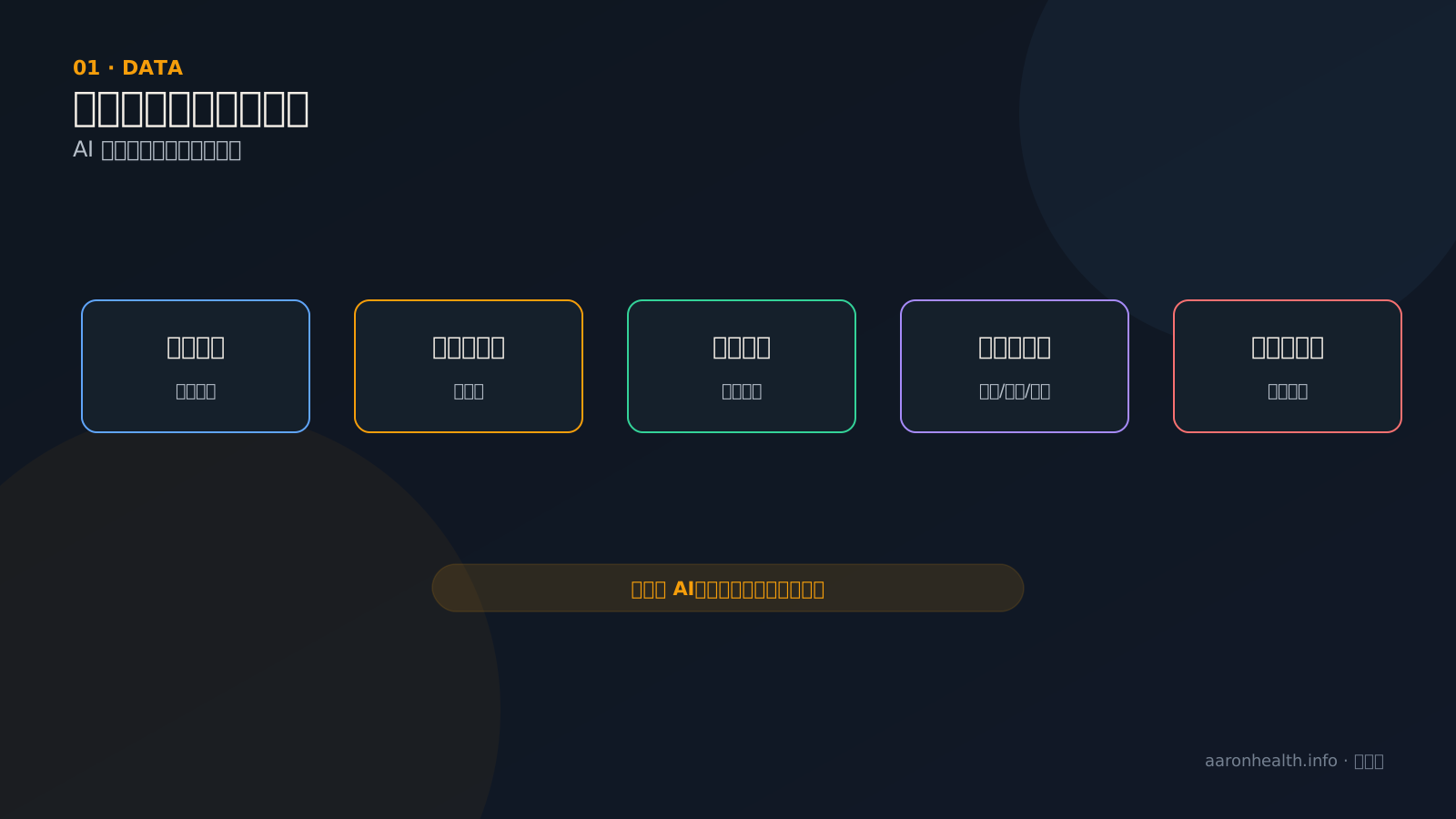
This is the bridge of the whole course, and the premise for every chapter that follows:
| Generation | The core role of data |
|---|---|
| Gen 1 | Large volumes of labeled samples (the fuel of supervised learning) |
| Gen 2 | Massive unlabeled corpora (the scale dividend of pretraining) |
| Gen 3 | High-quality reasoning traces + multimodal alignment + agent-interaction data + expert-level evaluation sets |
In one line: the role of data is upgrading from “training fuel” to “carrier of capability and knowledge asset.”
That single line sets the direction for everything that follows — shifting from “we govern so it can be used” to “we build so AI learns right, judges accurately, and dares to step into the clinic.”
How the legal profession should see it
The same paradigm table applies cleanly to law:
- In the Gen 1 era, legal AI was a “contract-labeling classifier” — the age of supervised learning
- In the Gen 2 era, legal AI moved into LLM-driven retrieval and drafting — Harvey AI, CoCounsel, PKULaw
- In the Gen 3 era, legal AI enters the age of reasoning — Turing Yitian trains on full court case files + judge SFT to distill a “legal chain of thought”
Law’s edge over medicine: judgments come with “reasons for the ruling” built in — naturally high-quality reasoning-chain data. I’ll cover this in detail in Chapter 10.
Next chapter: pinning down the word “data” — what metadata, datasets, data assets, and ontology actually are.
留言
欢迎留言,匿名也可以。填邮箱能收到我的回复通知。