
Opening · Medicine Speaks, Law Listens — the Underlying Logic Is Shared
A cross-industry talk for the legal profession on building data in the age of AI
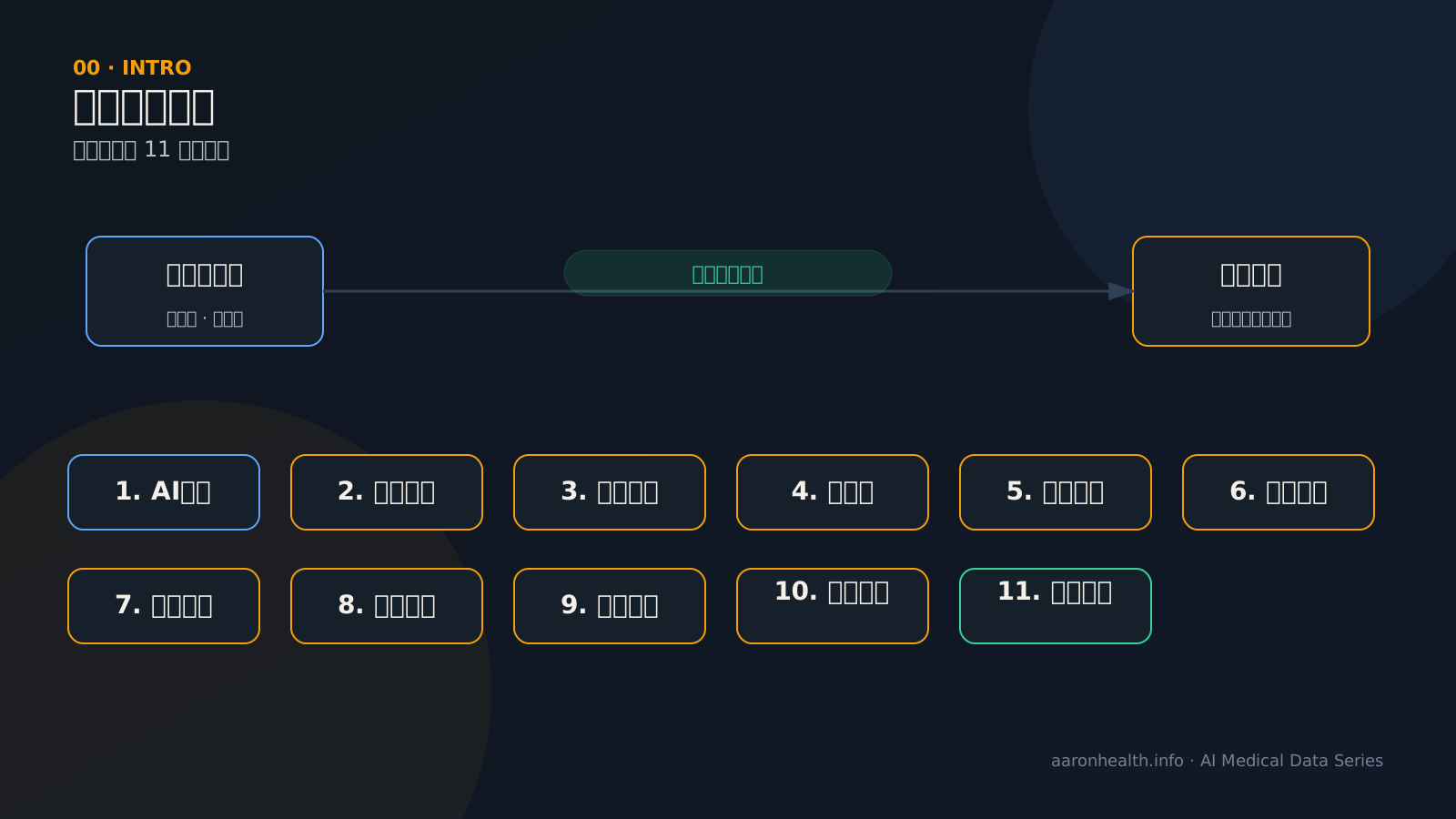
The title of today’s talk is, on its face, about medicine — Building High-Quality Medical Datasets in the Age of AI: Models and Paths.
But I want you to remember, from the very first sentence: the underlying logic is shared across every industry.
I’ll use medicine as the deep case, because it’s what I do every day. But at each key juncture I’ll give the corresponding lesson for the legal profession, so you can map the content straight back to your own business.
Why medicine and law are the most alike
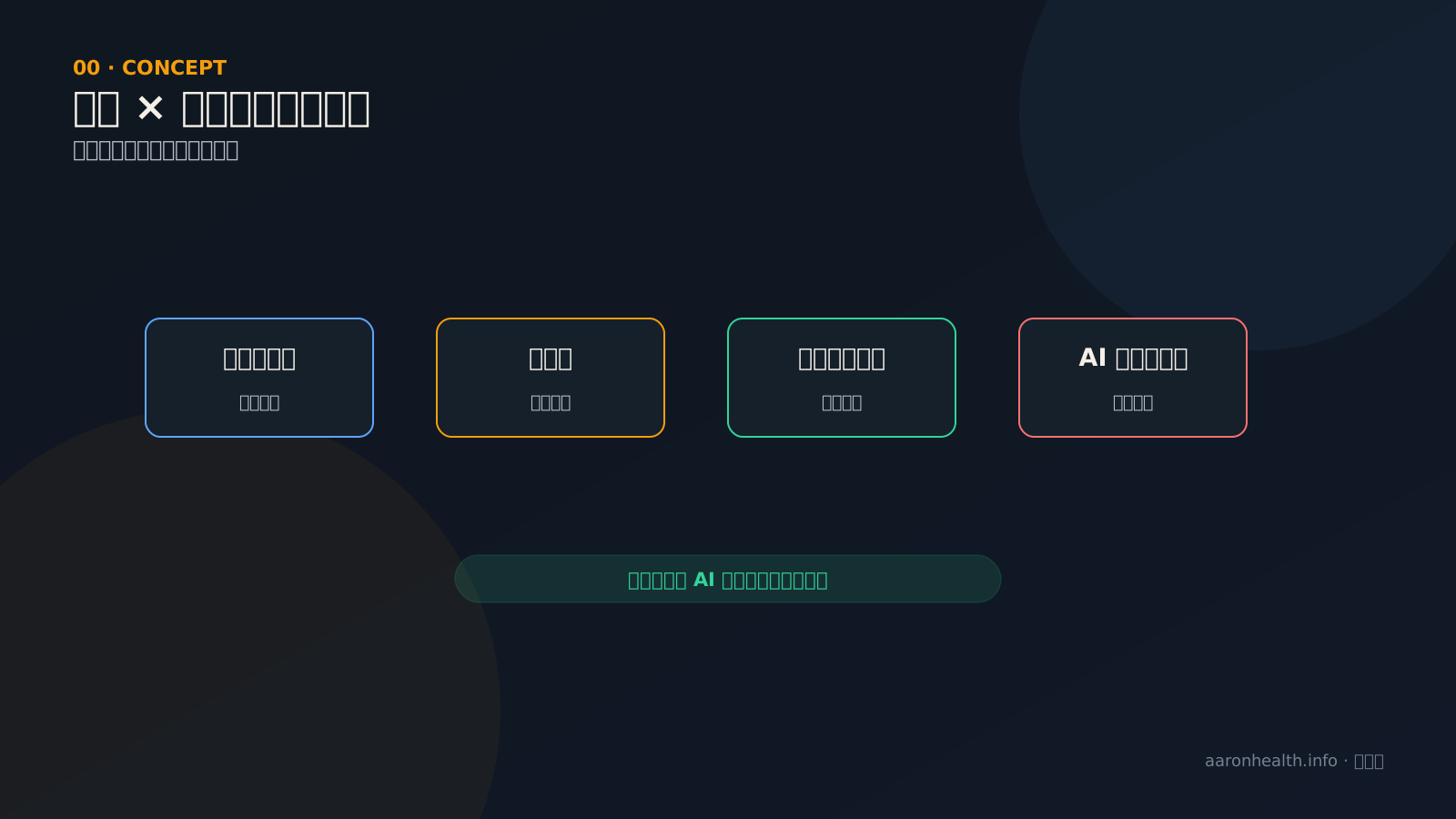
I believe medicine and law are the two professional industries most alike in the age of AI. Four shared traits make it obvious:
- Both highly specialized: training a qualified doctor takes 8–10 years; growing a senior lawyer takes no less.
- Both heavily regulated: medicine has ethics review, drug regulation, and insurance rules; law has jurisdictional accuracy, statute currency, and citability.
- Both rely on expert judgment: a radiology chief’s differential diagnosis and a judge’s reasoning are, at bottom, both high-density professional reasoning.
- Both costly when AI gets it wrong: a misdiagnosis can kill; citing a fabricated precedent gets you sanctioned in court.
Because of these four shared traits, the two industries can largely borrow each other’s lens on AI data building.
The logic chain of this course
The whole talk answers a single question: how do you build data in the age of AI?
But to answer it properly, we have to walk through 11 stops:
- What the age of AI is (a 2026 view)
- Defining “data” clearly (the concept stack)
- The role of data has changed (from fuel to intelligence)
- What “high-quality data” means (the 4+5 = 9 dimensions)
- How high-quality data is formed (governance + platform + govern-as-you-use)
- Different scenarios need different data (five classes of fuel)
- How to produce a dataset (the production methodology)
- How it evolves (the data flywheel + three trends)
- Working backward from business to data (the strategic anchor + the Palantir ontology path)
- Mapping to the legal profession (five classes of fuel + three lessons)
- An action framework (a landing checklist)
Each of the 11 chapters that follow is a standalone essay. If you’re short on time, start with chapters 4, 6, 9, and 10 — they’re the “professional muscle” of this talk.
One line to spoil the core first
You don’t build data to govern data — you build it so AI can close the business loop and raise your core competitiveness.
The same holds for medicine and law alike.
Next chapter: what the age of AI actually is.
留言
欢迎留言,匿名也可以。填邮箱能收到我的回复通知。