
Action Framework · Start With What You Can Do Tomorrow
Chapter 11 · The Business Loop, Five Classes of Fuel, Evaluation Gatekeeping, and Domain Ontology
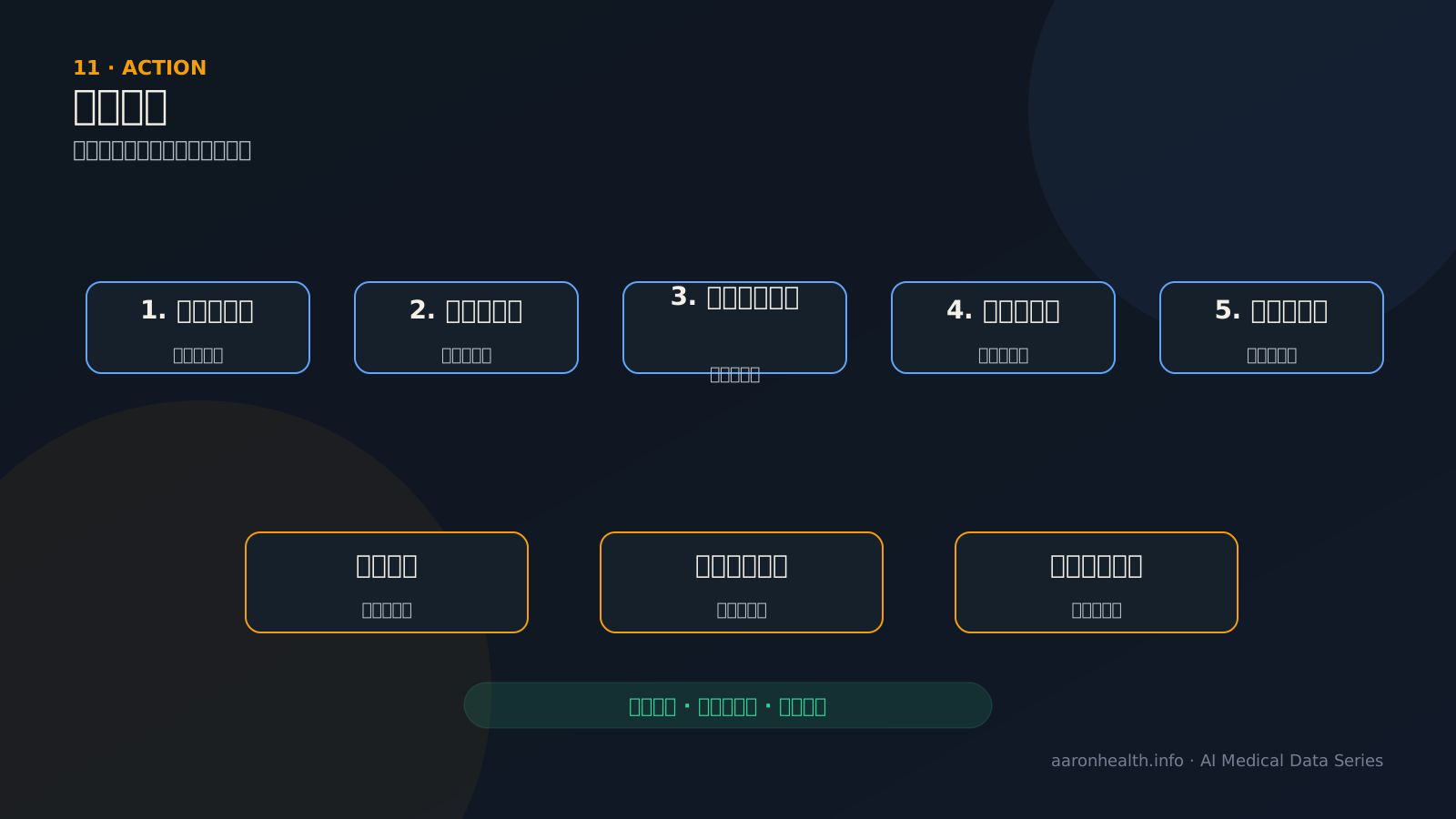
The final chapter. Time to bring it all home.
If the first 10 chapters were a framework for thinking, this one is a framework for action: what you can do tomorrow, what you should do this year, what you need to build for the long haul.
First, recap the whole logic
This talk walked through 11 stops:
- Opening: medicine speaks, law listens — the underlying logic is shared
- What the age of AI is: three paradigms + AGI
- What data is: the concept stack + medical taxonomy
- The role of data has changed: from fuel to intelligence
- What “high-quality” means: the 4+5 = 9 dimensions
- How it’s formed: governance, platform, govern-as-you-use, and three hard problems
- What different scenarios need: the five classes of fuel
- How to produce it: five production methodologies
- How it evolves: the data flywheel + three trends
- Working backward from business to data: the strategic anchor + the Palantir ontology path
- Mapping to the legal profession: five classes of fuel + three lessons
It all collapses to a single line:
You don’t build data to govern data — you build it so AI can close the business loop and sharpen your core competitiveness.
Five core one-liners
The five most important sentences in this course:
In 2022, data was fuel. In 2026, data is muscle memory, knowledge assets, and the basis for decisions.
The 4 dimensions are your entry ticket. The 9 dimensions are the maturity of your data assets in the age of AI.
Plenty of hospitals and law firms spend big governing data — only to find that 80% of their use cases don’t feed on training data at all. They feed on the knowledge base.
High-quality datasets aren’t governed into existence. They’re produced.
What decides your competitiveness, build yourself. What decides your productivity, buy where you can.
Advice for three audiences
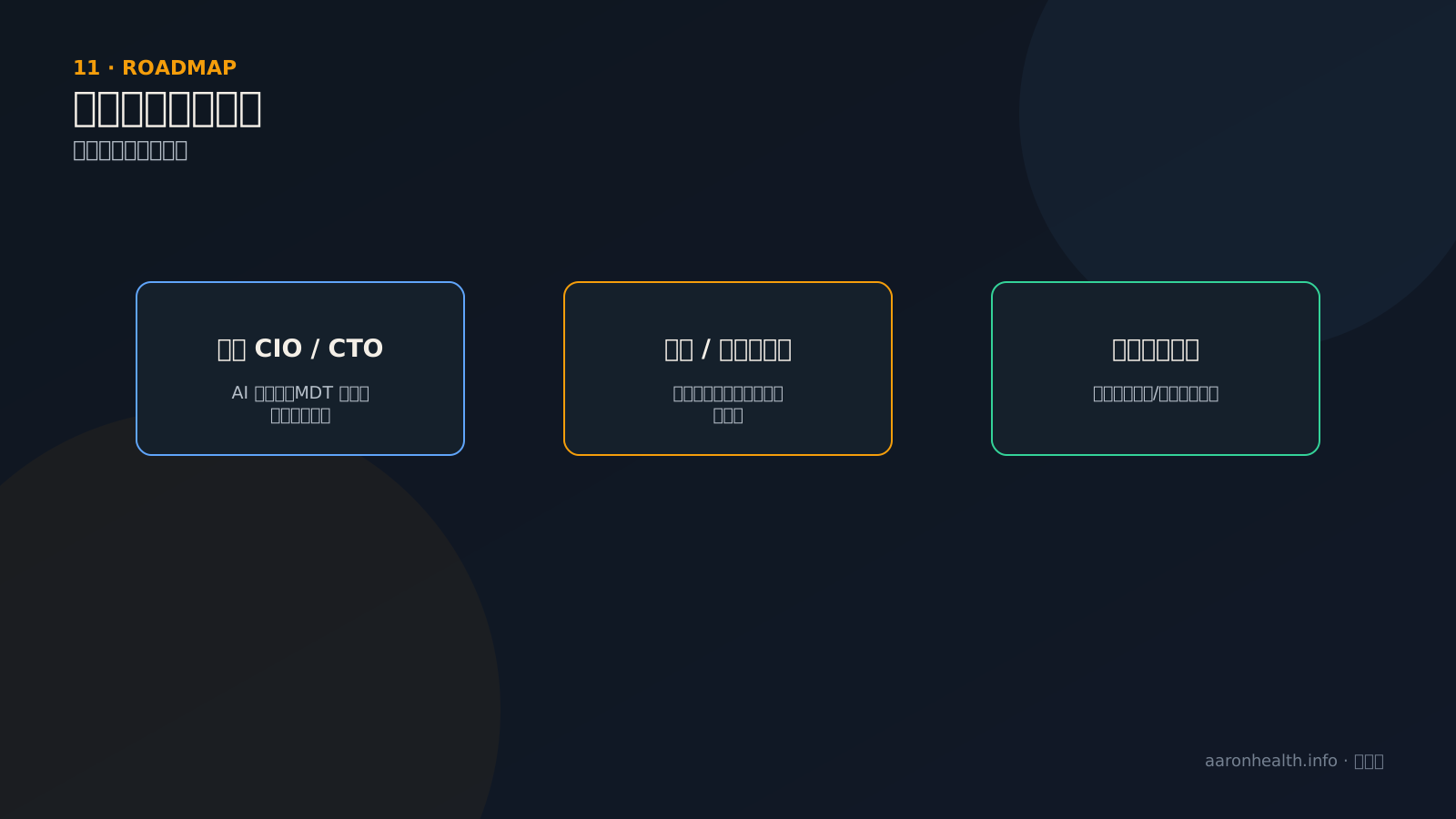
Hospital CIO / CTO:
- In year one, charter 3–5 AI business loops. Don’t kick off a hospital-wide data-governance megaproject first.
- Lead with knowledge-driven applications. Build confidence in three months.
- Stand up one expert-reasoning-chain production line — MDT structuring, for instance.
- Over the medium-to-long term, build the data foundation for patient agents and group-level data assets.
Law firm partner / head of legal:
- Lead with knowledge engineering: get statutes, precedents, contracts, and compliance libraries off the ground first.
- Use off-the-shelf legal AI tools to nail the productivity use cases.
- Build your own expert-argumentation library, client-specific methodologies, and a judgment-structuring production line.
- Shift from “hire more lawyers” to “orchestrate more agents.”
Cross-industry leaders:
- Work backward from business to data — not from the database to the business.
- Separate productivity AI from core-competitiveness AI.
- Buy general-purpose capability; build the assets that are uniquely yours.
- Build domain ontology, a data flywheel, and an evaluation-gatekeeping system.
What you can do the moment you get back
First, draw the business-loop map.
Lay out patients, clients, cases, contracts, and operational flows. Mark every point where AI can step in.
Second, assign a fuel type to every AI application.
Does it feed on knowledge, training data, reasoning chains, workflows, or embodied trajectories? Get the type wrong and everything downstream goes wrong.
Third, split productivity AI from core-competitiveness AI.
Buy the productivity. Build the core competitiveness yourself.
Fourth, lead with knowledge-driven applications.
Insurance policy, clinical guidelines, statute libraries, contract libraries, SOPs — all low barrier, high return.
Fifth, set up an evaluation-set gatekeeper.
Even 50 questions beat zero. Without an evaluation set, the faster the flywheel spins, the more dangerous it gets.
What to do this year
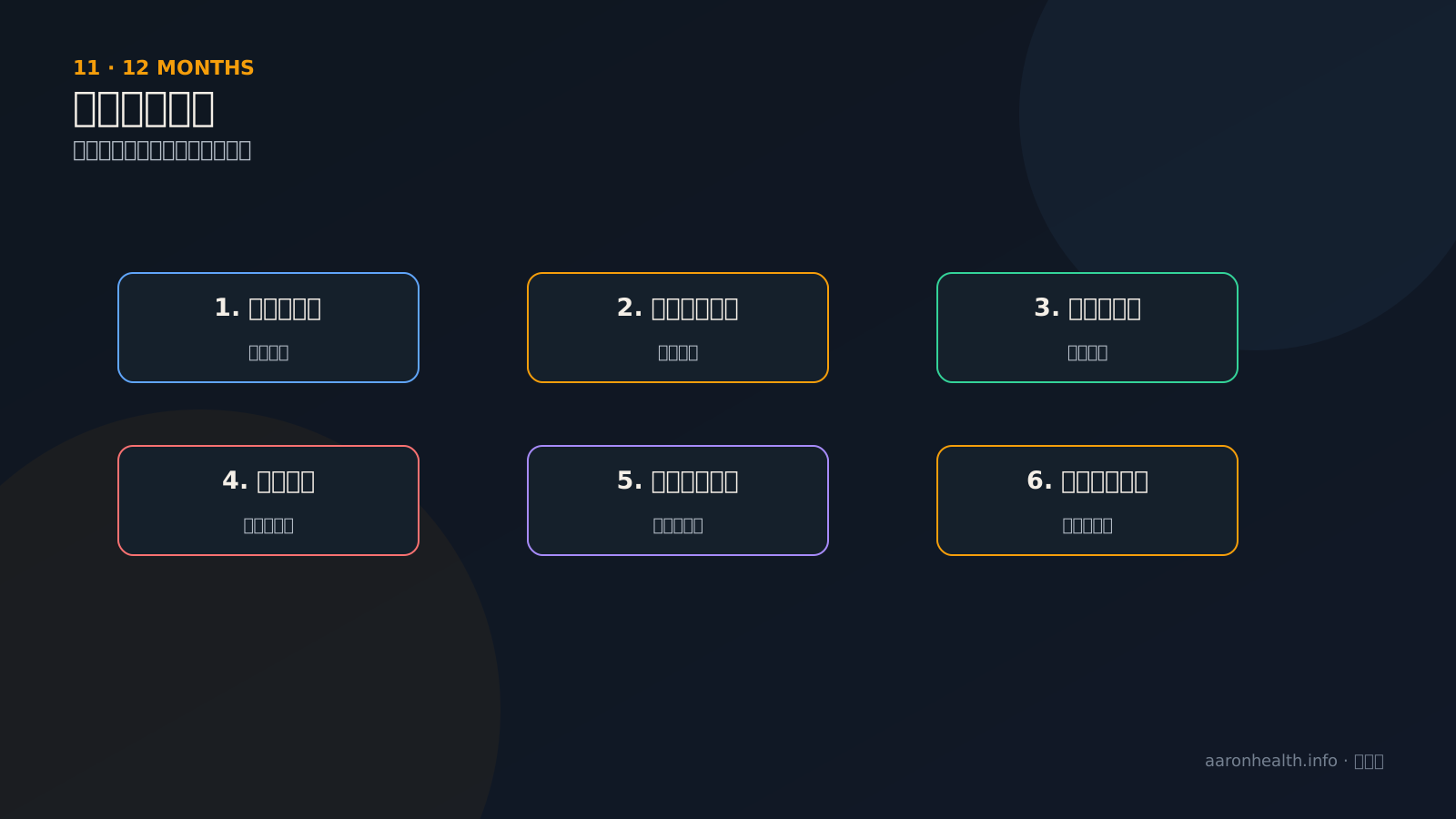
Zoom out to 12 months, and I’d do five things:
- Instrument the flywheel: pick at least one application and capture feedback from day one of launch.
- Stand up an expert-reasoning-chain production line: MDT, hard cases, adjudication reasoning, legal opinions — any of these will do.
- Build a build-vs-buy decision framework: don’t build everything in-house, and don’t outsource your core capabilities.
- Start planning domain-ontology construction: medical ontology, legal ontology, specialty ontology, business-object relationships.
- Let business drive your governance priorities: govern where AI is about to be used, first.
Closing
Building data in the age of AI isn’t a technical question. It’s a strategic one.
Governance is the means. Business is the end.
The next wave of AI competition — in medicine, in law, in every professional industry — will be won on three things:
- Domain ontology
- Expert reasoning chains
- The data flywheel
This isn’t something a data department can pull off alone. It’s a rebuild of organizational capability.
The series ends here. The real work begins the moment you draw your first business loop.
留言
欢迎留言,匿名也可以。填邮箱能收到我的回复通知。