
Mapping to Law · The Profession That Looks Most Like Medicine
Chapter 10 · Statute libraries, judicial reasoning, legal agents, and the legal flywheel
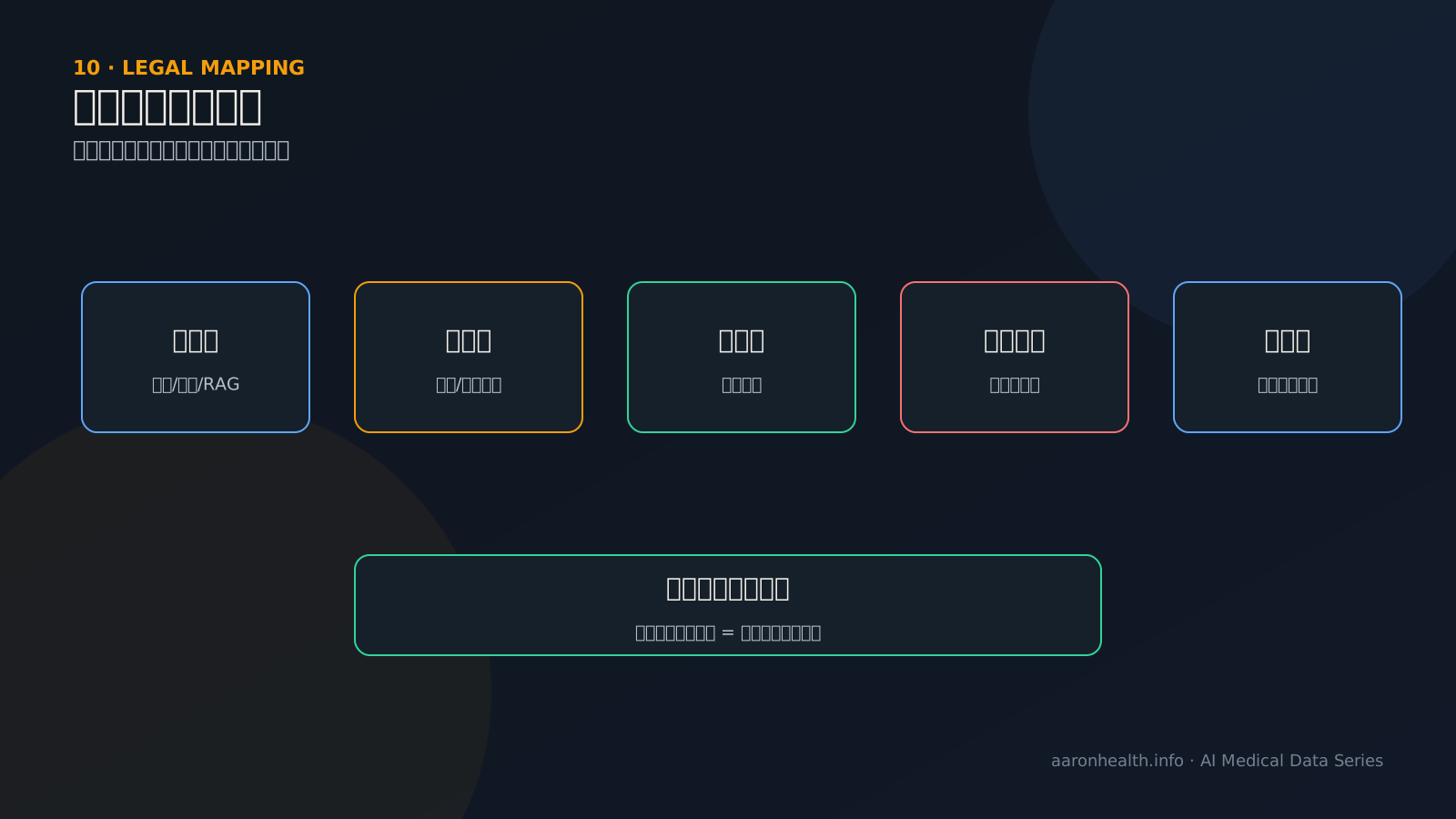
This chapter is for the legal profession.
I’ve used medicine as the running case throughout, but the underlying logic is universal. Medicine and law are the two professional industries most alike in the age of AI:
- both highly specialized
- both heavily regulated
- both reliant on expert judgment
- both costly when AI gets it wrong
Where they differ: law has a few unique advantages — above all, the judgment itself carries the reasoning built in.
The five classes of fuel in legal AI
Using the framework from Chapter 6, legal AI splits into the same five classes.
A. Knowledge type: law’s biggest goldmine
Eighty percent of legal AI applications are knowledge type first:
- legal search: statutes, precedents, judicial interpretations, departmental rules
- contract template / clause libraries
- compliance Q&A: data security law, personal information protection, AI acts, sector regulation
- legal-opinion retrieval / analogous-case recommendation
- foreign-law search: outbound compliance, cross-border litigation
Representative products include Delit Legal Search, PKULaw, Westlaw, and Lexis+.
The fuel here is authoritative statute libraries, precedent libraries, and case libraries. Law has an edge over medicine: more public data, higher structuring.
So the first recommendation is blunt:
Law should do knowledge engineering first, not data governance.
Case: why a legal knowledge base is worth building
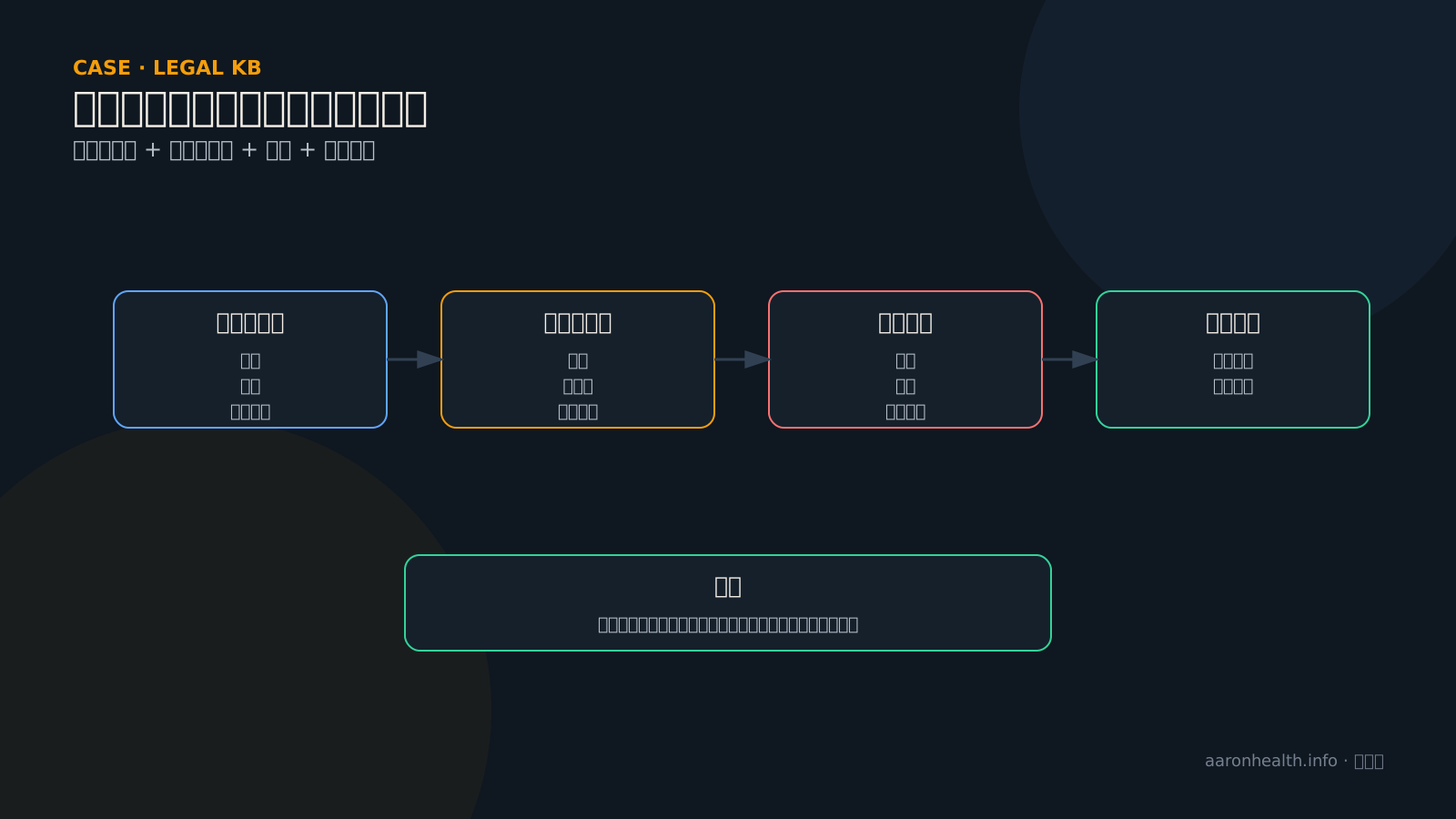
The value of a legal knowledge base isn’t “surfacing the document” — it’s managing authority, currency, citation chains, and internal experience all at once.
The mature legal knowledge products abroad — Westlaw / Practical Law / CoCounsel — are essentially statutes, precedents, practice guides, templates, workflow, and generative AI on a single professional-grade desk. They prove one thing: the foundation of legal AI is a trustworthy knowledge base first, not a raw large model.
For law firms and in-house teams, the more realistic path is an internal RAG knowledge base:
- external authoritative library: statutes, precedents, regulatory Q&A, practice guides
- internal experience library: past contracts, legal opinions, project retrospectives, negotiated clauses
- permission system: access boundaries by client, by matter, by lawyer
- citation traceability: every AI answer has to trace back to its source text
The payoff is direct: junior lawyers ask fewer repeat questions, senior lawyers do less low-value search, and the legal department turns experience into reusable assets. See: Thomson Reuters CoCounsel / Westlaw case study.
B. Data type: contracts and documents
Data-type applications include:
- contract review: flagging risky and non-compliant clauses
- intelligent document review: complaints, defenses, filing materials
- case-outcome prediction: adjudication tendency for similar cases, damages forecasting
- charge prediction, sentencing support
These run on massive contract samples, expert-annotated risk points, and historical judgment data. Representative products include Harvey AI, Legora, Spellbook, Ironclad Jurist, Tongyi Farui, and Faxingbao.
The point isn’t to amass a pile of contracts — it’s to build a sustainable annotation pyramid.
C. Reasoning type: law’s killer application
Reasoning type is law’s most valuable direction after 2026:
- legal argument generation
- breaking down points of dispute
- analysis of applicable law
- complex contract-negotiation strategy
- cross-border compliance argumentation
- legal opinions on hard cases
Law’s exclusive advantage is the judicial reasoning inside the judgment. A judge is required to write out the reasoning, which gives the profession a globally rare seam of raw reasoning chains.
China Judgments Online, provincial high-court judgments, and the Supreme Court’s guiding cases are, at bottom, a vast mine of legal reasoning chains.
Whoever structures judicial reasoning best owns the commanding heights of legal reasoning AI.
D. Workflow / agent type: the fastest-growing
Legal agents are scaling fast:
- legal agents: GC AI, Lvxing Legal Cloud, Xinghan Legal Agent
- end-to-end firm agents: search, drafting, review, archiving
- enterprise “virtual legal departments”: compliance, contracts, IP
- courtroom-assist agents: real-time search, dispute-point prompts
The fuel is internal enterprise data, the legal knowledge base, tool APIs, and interaction-trace feedback.
The organizational shift behind this matters more:
Tomorrow’s legal department won’t hire more lawyers — it’ll run on 2–5 lawyers plus 50–100 agents.
And the legal lead’s edge shifts from “how much law I know” to “can I orchestrate the agents.”
E. Embodied type: not the main battlefield
Embodied intelligence in law is thin, still embryonic:
- courtroom audio transcription
- AI courtroom assistance
- AI legal kiosks
Worth watching, but not where the fight is now.
The special dimensions of high-quality legal data

Beyond the universal 9 dimensions, law adds a few of its own.
Jurisdictional accuracy: Chinese, US, EU, and local law cannot be mixed.
Currency and traceability: the line of applicability before and after a statute is amended must be clear.
Citability: every AI output has to trace back to a statute, a precedent, a source.
Argumentation completeness: not just a conclusion, but the points of dispute, the applicable law, and the reasoning.
These dimensions decide whether legal AI gets accepted by real lawyers, in-house counsel, and courts.
What makes the legal flywheel different
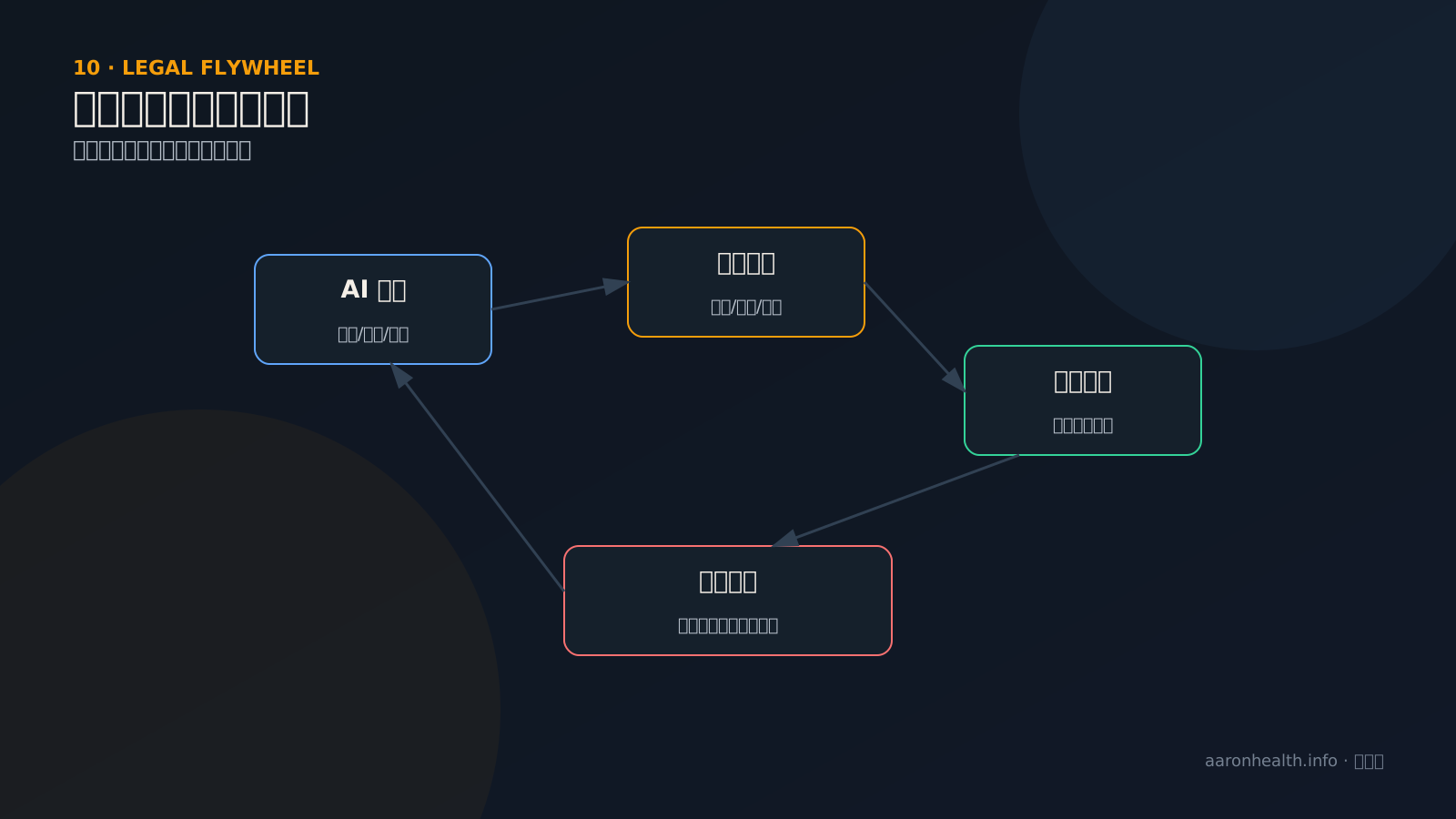
The legal flywheel spins faster than medicine’s. Lawyers review contracts, draft documents, and run searches every day — feedback density is extremely high, and feedback cost is lower than in medicine.
But the risks are sharper too:
- AI hallucination can fabricate precedents
- a bad citation can get you sanctioned in court
- jurisdiction and currency errors hit the quality of a legal opinion directly
So the legal flywheel isn’t about spinning faster — it’s about spinning more accurately.
Expert-in-the-loop plus evaluation gatekeeping is even stricter in law than in medicine.
Three lessons for the legal profession
First, knowledge engineering comes first.
Organize the statute, precedent, contract, and compliance libraries, wire in RAG and citation traceability, and you’ll see results in three months. Don’t open with a “firm data platform.”
Second, judicial reasoning is a national-scale goldmine.
Judicial reasoning is a ready-made legal reasoning chain. Whoever structures it owns the 2026–2030 edge in legal reasoning AI.
Third, the legal department becomes an agent orchestrator.
Tomorrow’s legal lead’s core skill isn’t just legal expertise — it’s wiring together the knowledge base, tools, processes, evals, and agents.
Closing the chapter
Law and medicine both win on expert reasoning chains, both fear AI hallucination, both run on the flywheel loop.
The difference:
Law’s judgments are born reasoning-chain gold — a natural advantage over medicine.
Next chapter, we close with an action framework: what you can start doing tomorrow.
留言
欢迎留言,匿名也可以。填邮箱能收到我的回复通知。