
How High-Quality Data Forms · The Three-Piece Set + Three Hard Problems
Chapter 5 · Governance + platform + govern-as-you-use — necessary, not sufficient
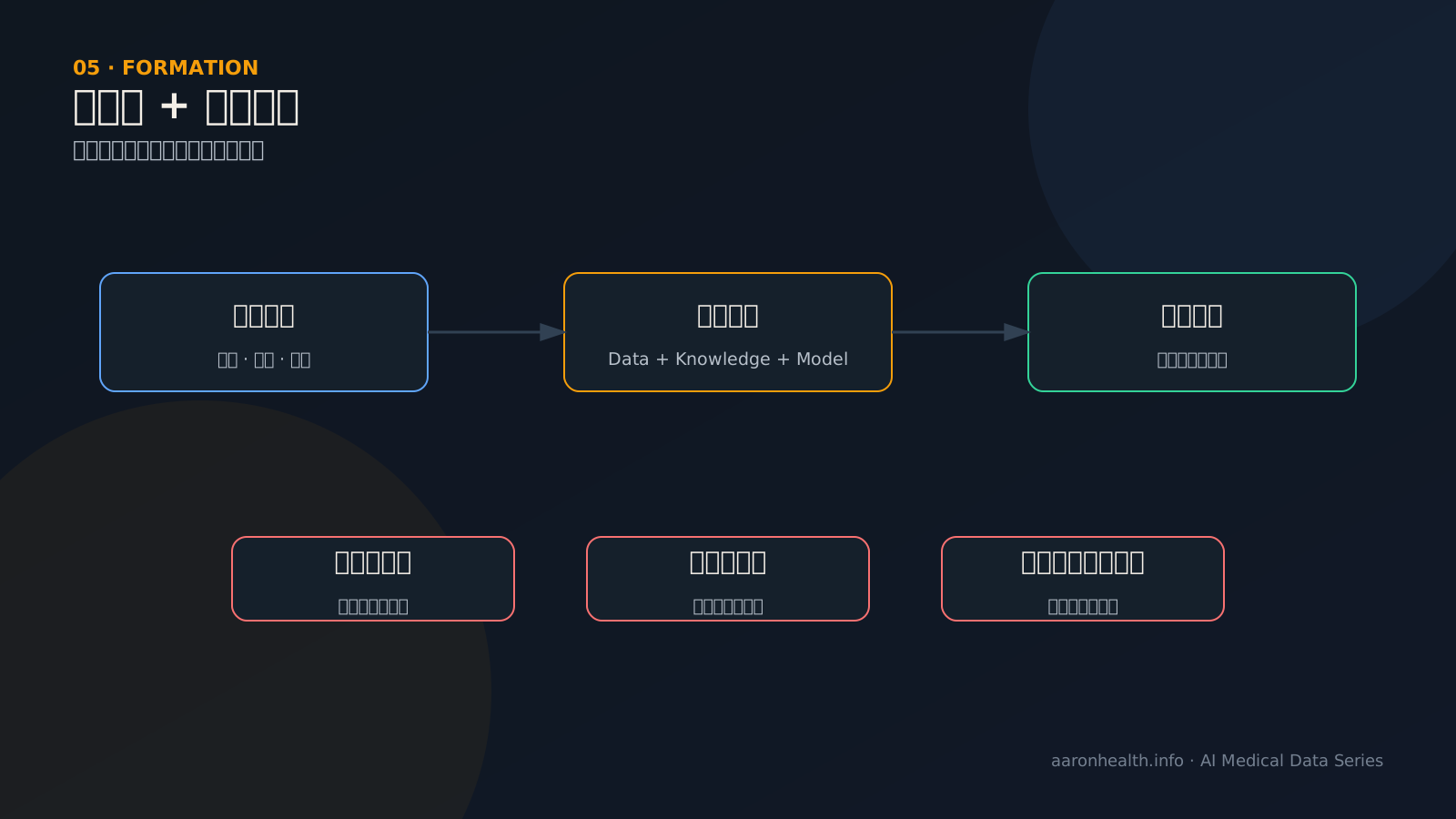
This is a transition chapter. The three-piece set is the old familiar trio every industry knows, and it must not steal the show. The audience heard it ten years ago — run through it again and they’ll tune out.
So this chapter follows one logic: cover the three-piece set fast, sharpen what the age of AI adds, and leave a hook.
Piece one: data governance
The classic version: organization (CDO / data governance committee) + rules (standards, specs, processes) + tools (quality monitoring, lineage).
What the age of AI adds:
- More objects to govern: training sets, eval sets, reasoning traces, and Prompt/Agent configs all have to come under management.
- More roles: beyond the CDO, you need an “AI data owner” and a model-eval owner.
- More risks: data poisoning, model bias, traceability of generated content.
AI data without governance is an unguarded ammunition depot.
Piece two: the data platform
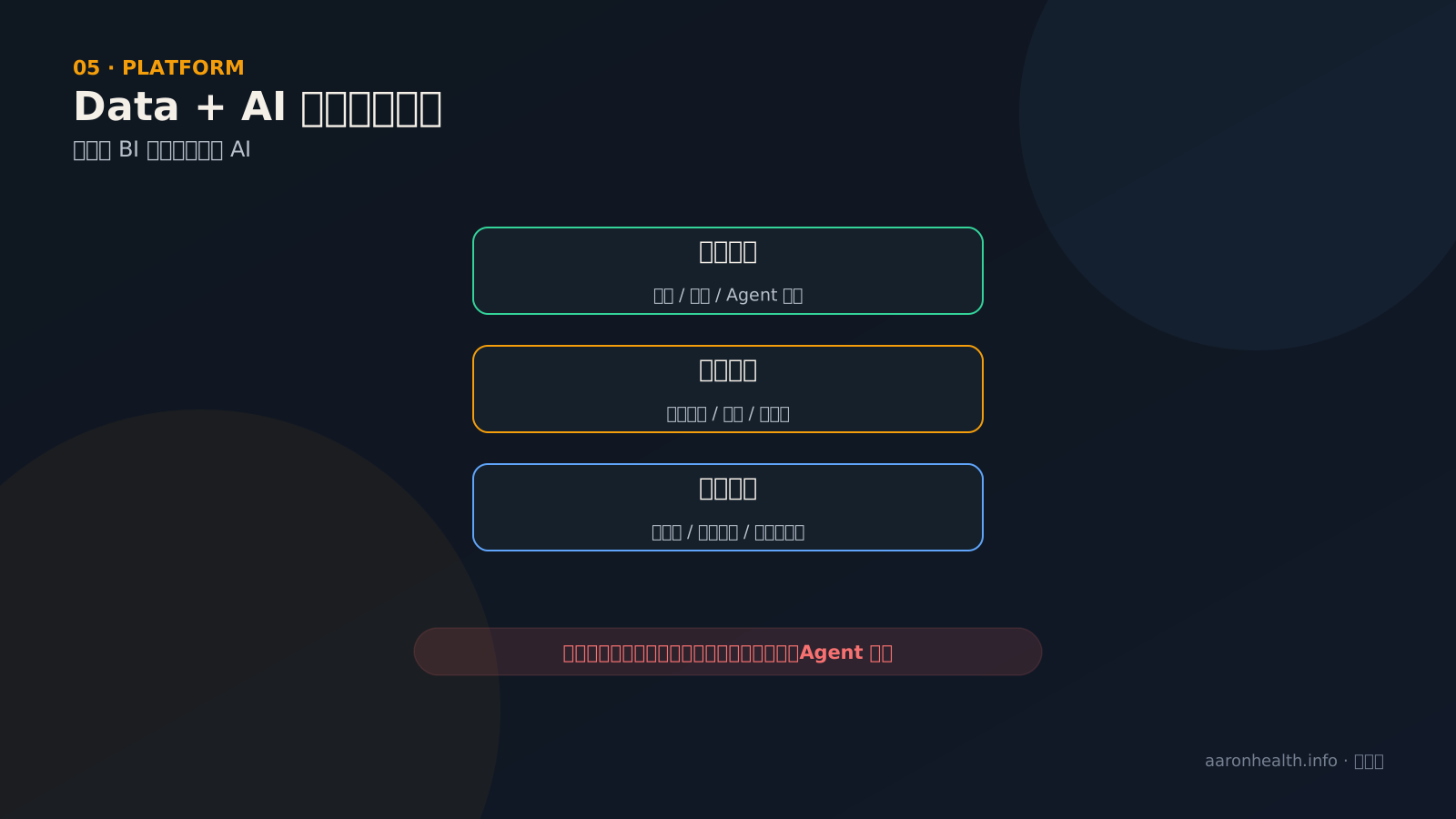
The classic version: a unified platform of collect → integrate → govern → serve, built to kill data silos.
What the age of AI adds:
- It’s not just for reports anymore — it has to feed models, support Agents, and run evals.
- Three layers stacked: the data platform (structured / semi-structured) + the knowledge platform (graphs / ontology) + the model platform (foundation models / domain models / Agents).
- Multimodal-native: imaging, pathology, voice, text, and omics all have to connect inside one platform.
⚠️ One warning: plenty of hospital “data platforms” are just a ten-year-old BI playbook with a new label — AI won’t run on them. The test is simple: does your platform support vector retrieval, does it support multimodal fusion, does it have Agent orchestration. If not, it’s not a Data+AI platform.
Piece three: govern-as-you-use (the data flywheel)
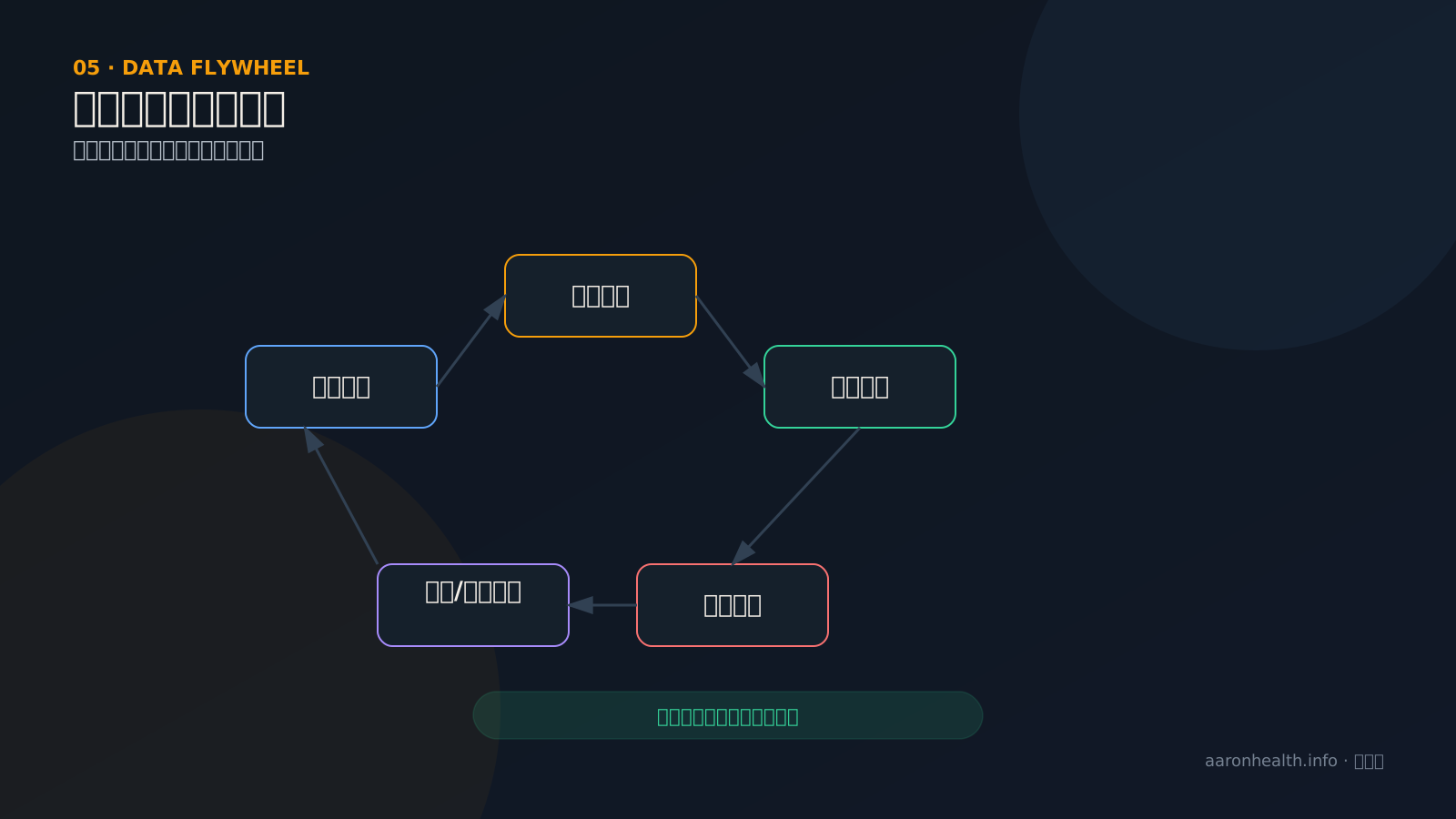
The classic version: use exposes problems → problems feed back into the data → the data gets better the more you use it.
What the age of AI adds:
- Clinical use of AI → physician feedback → data annotation / retraining → model iteration → better in use.
- Real-world evidence (RWE) feeds the training loop: internet hospitals, wearables, and follow-up are all return channels for data.
- DataOps + MLOps + EvalOps turning in lockstep.
I once put it this way to a friend:
AI is software with a heartbeat. The heartbeat is the data flywheel turning.
The three hard problems the three-piece set can’t solve
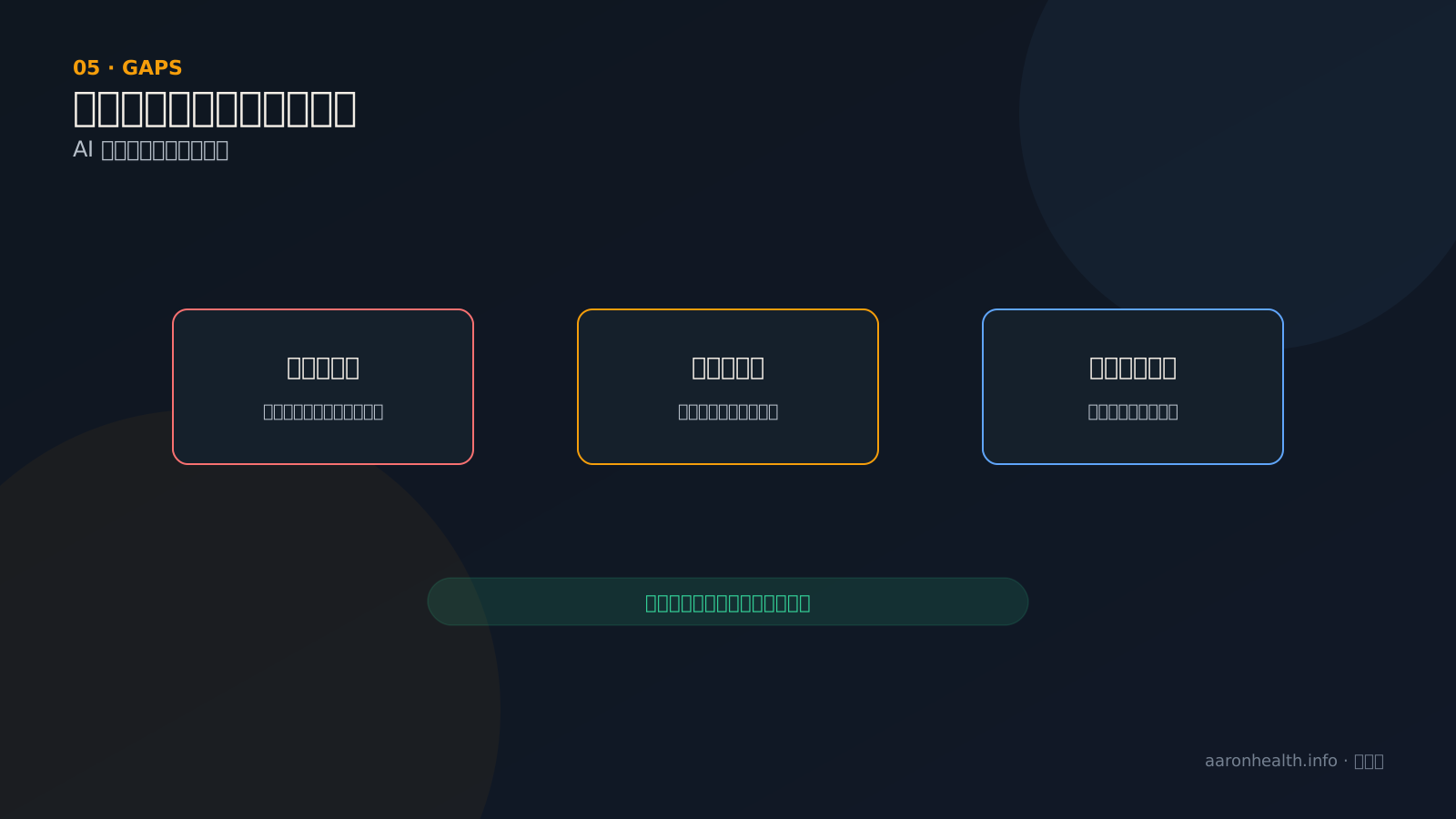
Here’s where you owe the audience the truth — the three-piece set is your entry ticket, but it doesn’t solve the real problems of medical data in the age of AI:
Problem one: no single hospital’s data, however large, can feed a foundation model
- Federate with whom, how, and who does the work versus who holds the rights?
- Chapter 6 won’t answer this head-on, but the end of this chapter has to raise it.
Problem two: how do you produce high-quality reasoning chains / expert-consensus data?
- You can’t mine it out of legacy data — you have to build a new production line.
- Chapter 7 is dedicated to the methodology for producing reasoning chains.
Problem three: turning data from a “cost center” into an “asset / revenue center”
- How do you price it, assign rights, and split returns?
- China’s “Twenty Data Measures” are already pushing this; Chapter 8 covers the data-as-a-factor trend.
Execution note for this chapter
If you’re giving this talk, keep Chapter 5 to 5–8 minutes (on a 60-minute slot). Run past 10 and you’ve failed — the audience will feel you’re rehashing old news.
Put all the “theory” on a single slide. The weight belongs to each item’s “what the age of AI adds” and the “three hard problems” at the chapter’s close.
The close that matters
Governance, the platform, and govern-as-you-use are your entry ticket — they don’t solve the real problems of medical data in the age of AI.
The next chapter is the climax of the whole talk: it splits data into five classes by the core fuel type of the AI application, telling the audience exactly what data their hospital — or law firm — actually needs to build.
留言
欢迎留言,匿名也可以。填邮箱能收到我的回复通知。